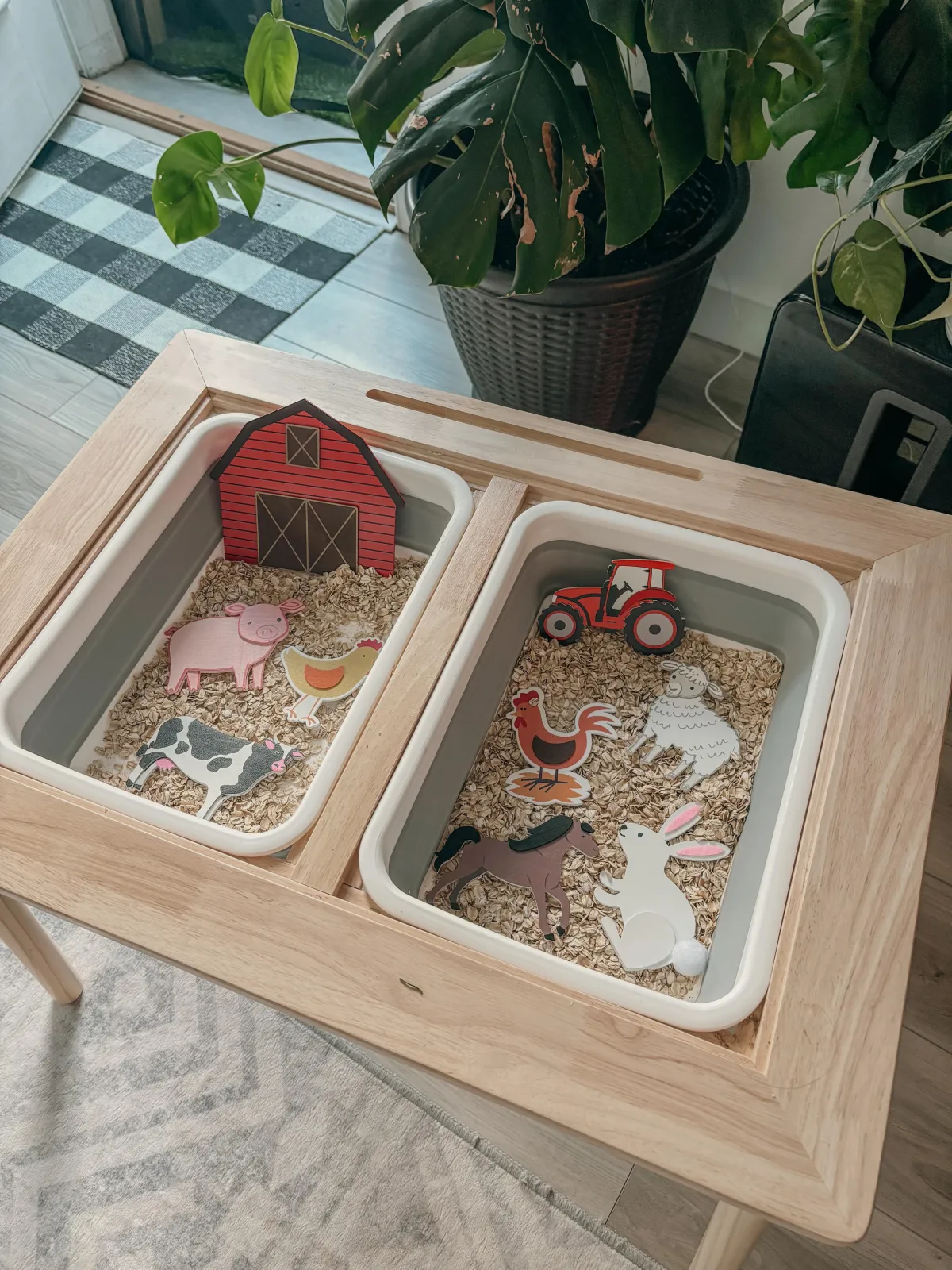
SENSORY BINS
Sensory bins aren’t just “messy play” — they build motor skills, language, emotional regulation, and brain connections through hands-on exploration. It’s learning disguised as play.
WHY SENSORY BINS?
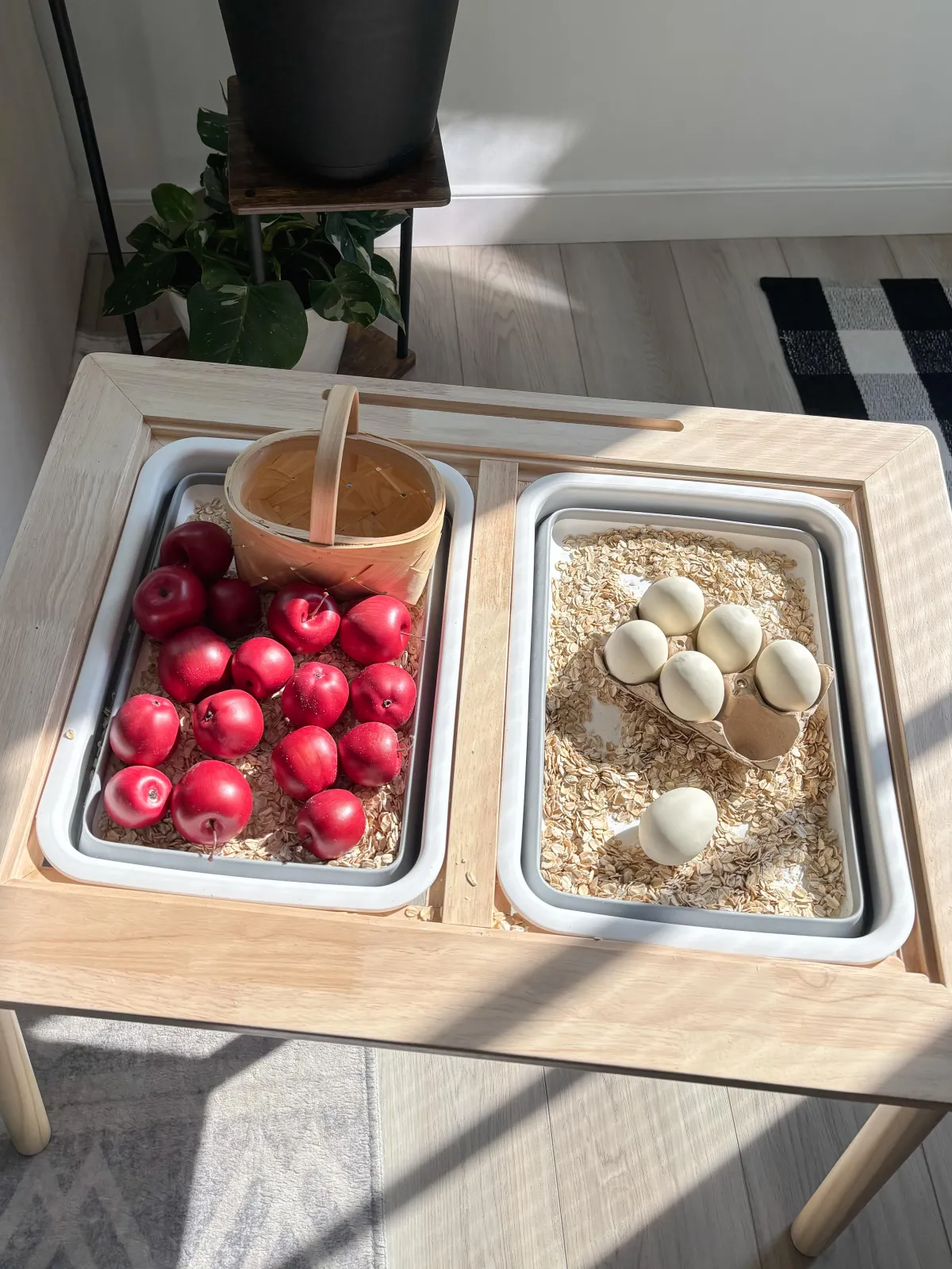
Builds Fine Motor Skills
Scooping, pouring, pinching, and transferring materials strengthen little hands and fingers which are foundational skills for feeding, dressing, and eventually writing.
Supports Brain Development
Hands-on sensory experiences create and strengthen neural connections, helping toddlers learn through exploration, curiosity, and cause-and-effect play.
Encourages Language Growth
New textures and actions naturally introduce descriptive words like “soft,” “wet,” “heavy,” and “smooth,” supporting vocabulary and communication skills.
Promotes Emotional Regulation
Repetitive, soothing movements like digging and pouring can calm the nervous system and help toddlers self-regulate during big feelings or transitions.
Fosters Independent Play + Focus
Open-ended sensory play invites toddlers to explore at their own pace, building attention span, confidence, and the ability to play without constant direction.
Early Math + Science Concepts
Toddlers naturally learn ideas like full/empty, more/less, sinking/floating, and sorting through hands-on experimentation.
Sensory Processing + Tolerance
Exposure to different textures helps children become more comfortable with touch, mess, and new environments — an important part of overall development.
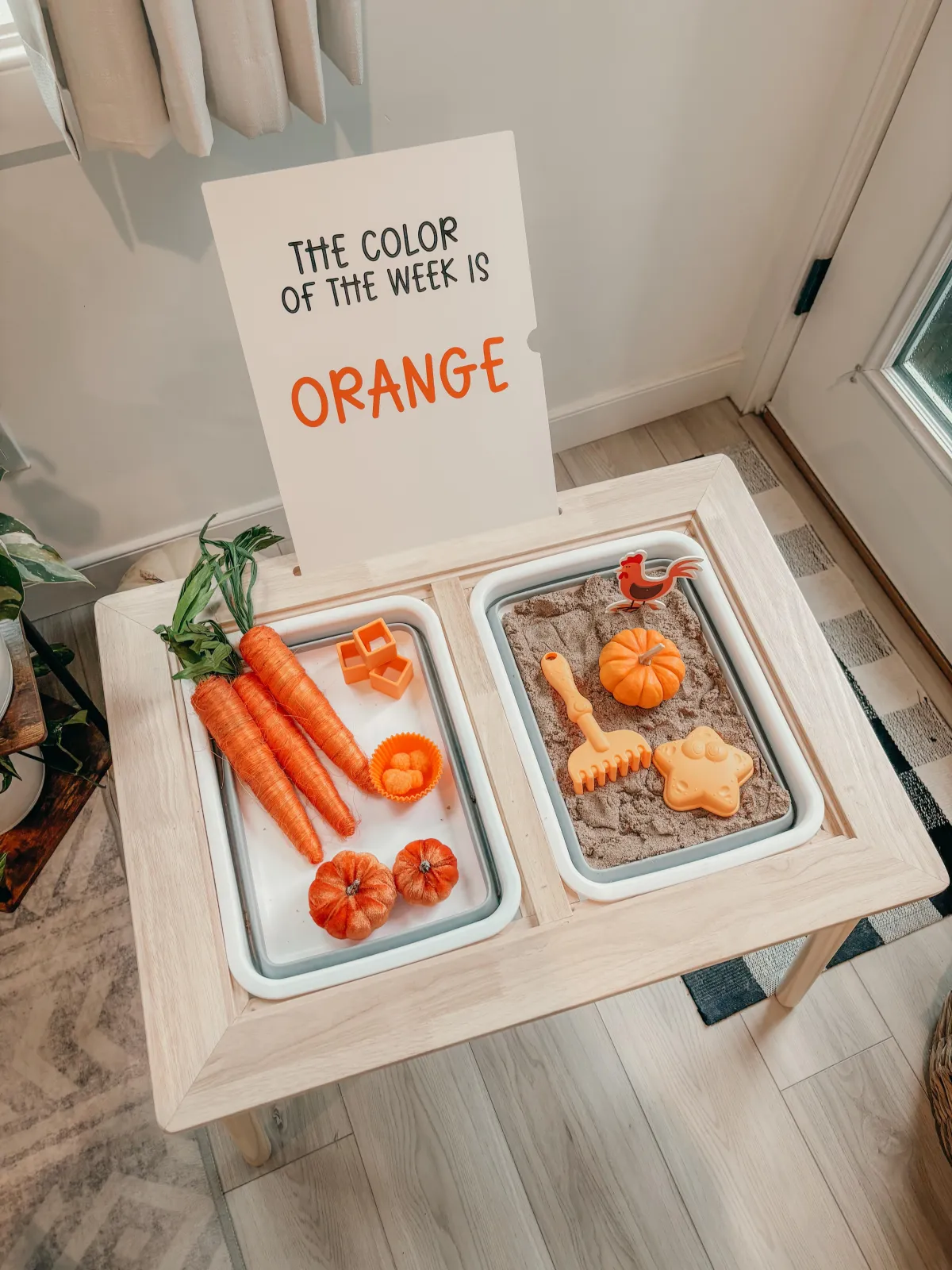
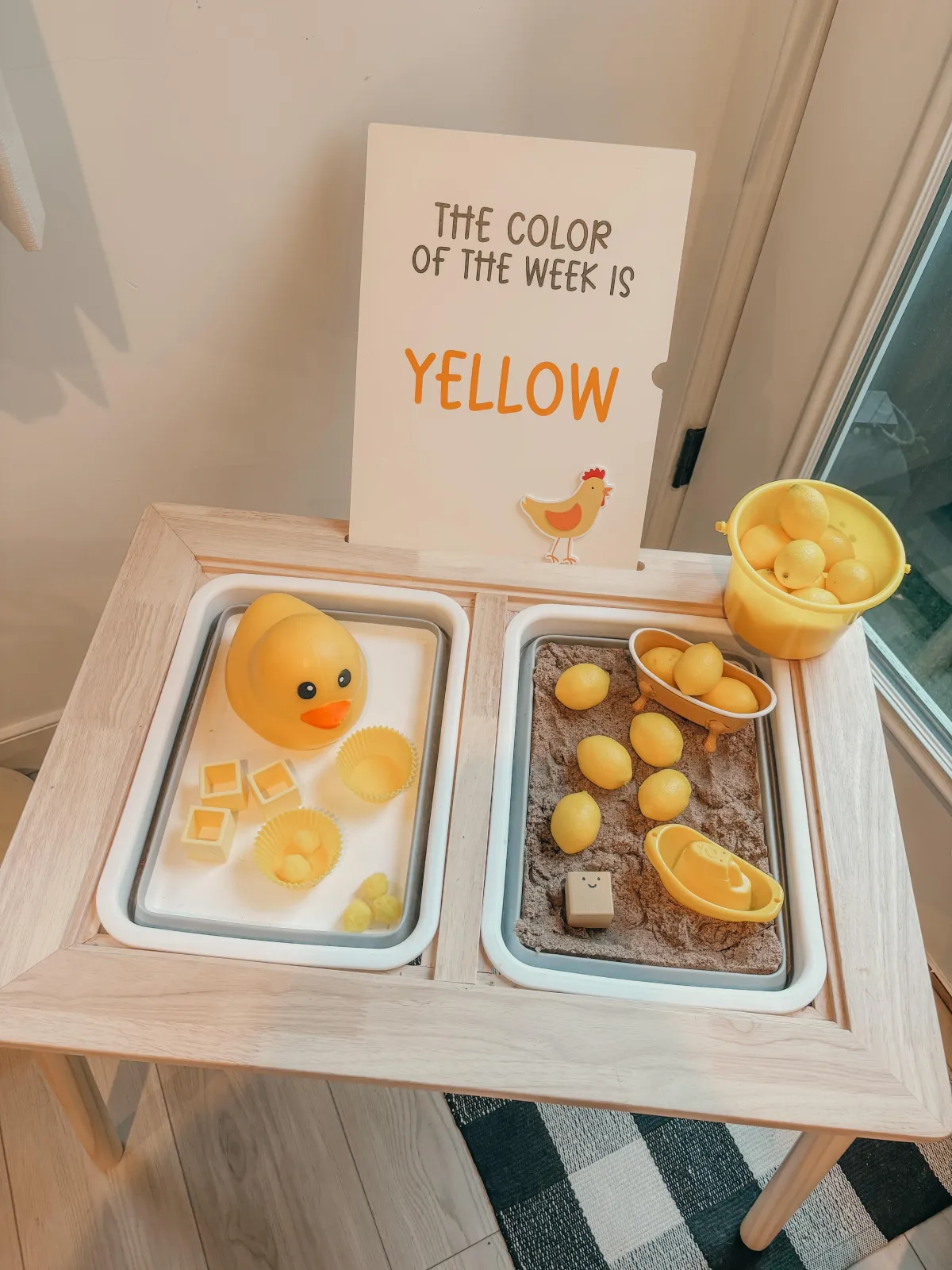
Color Series Bins
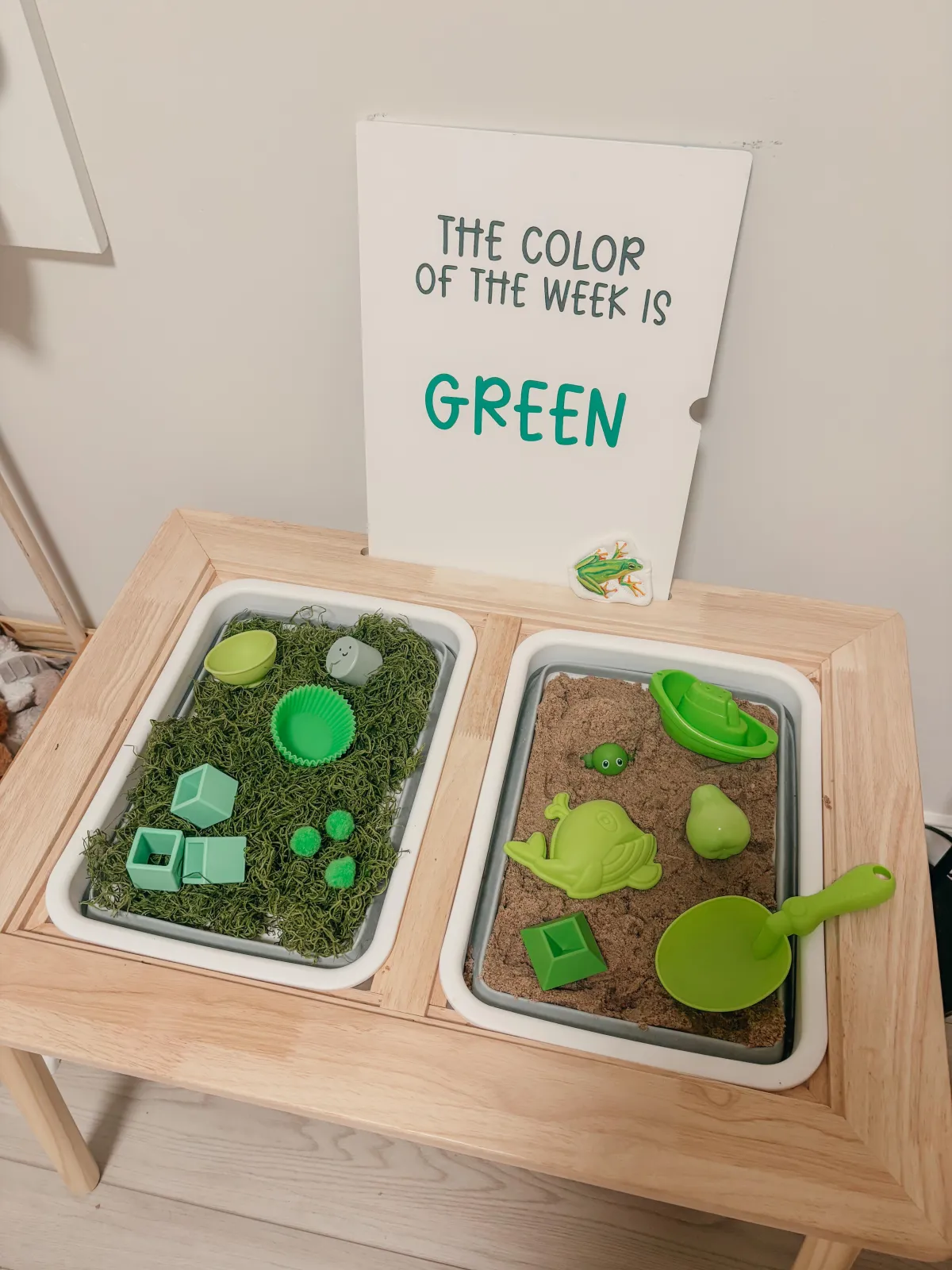
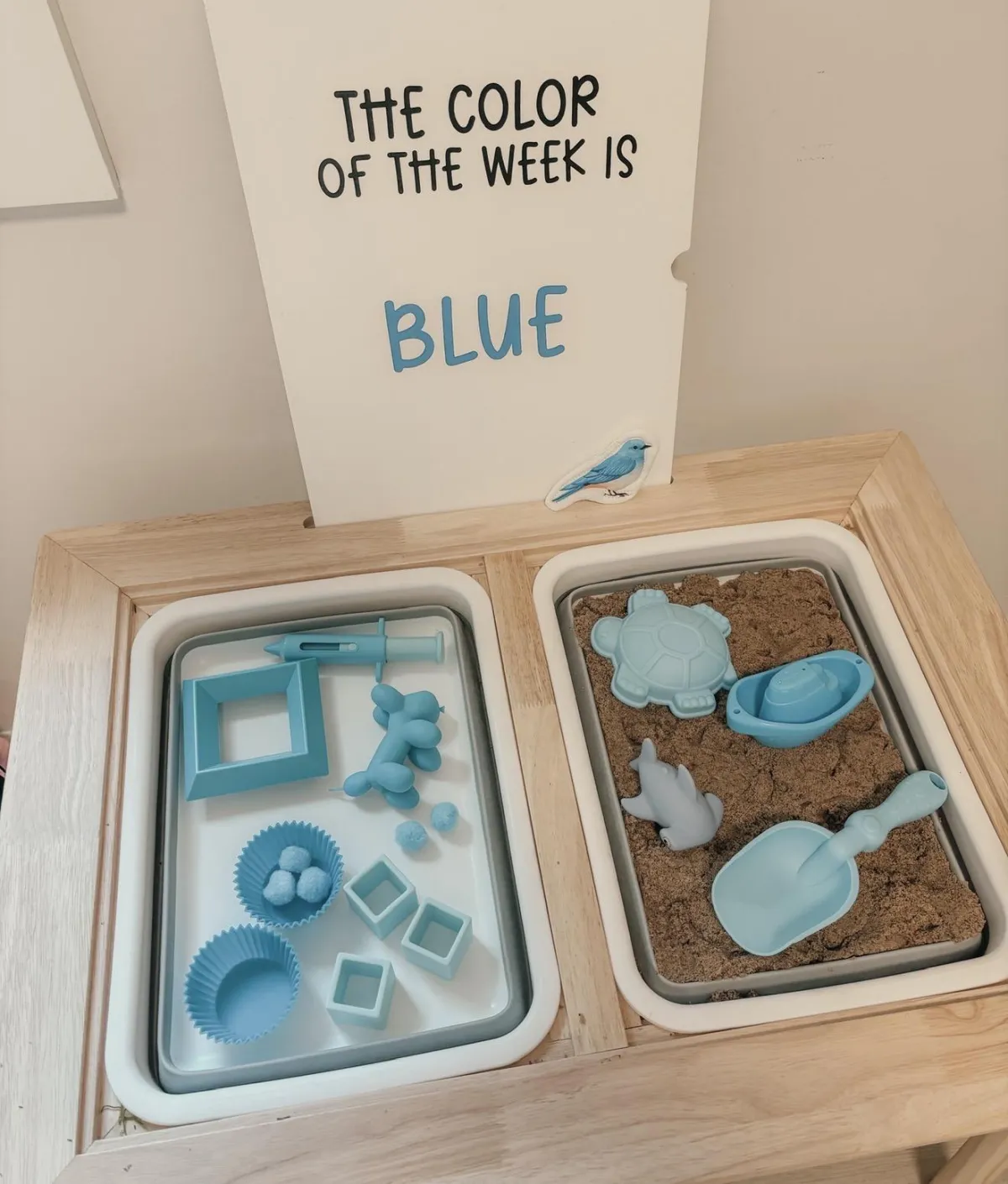
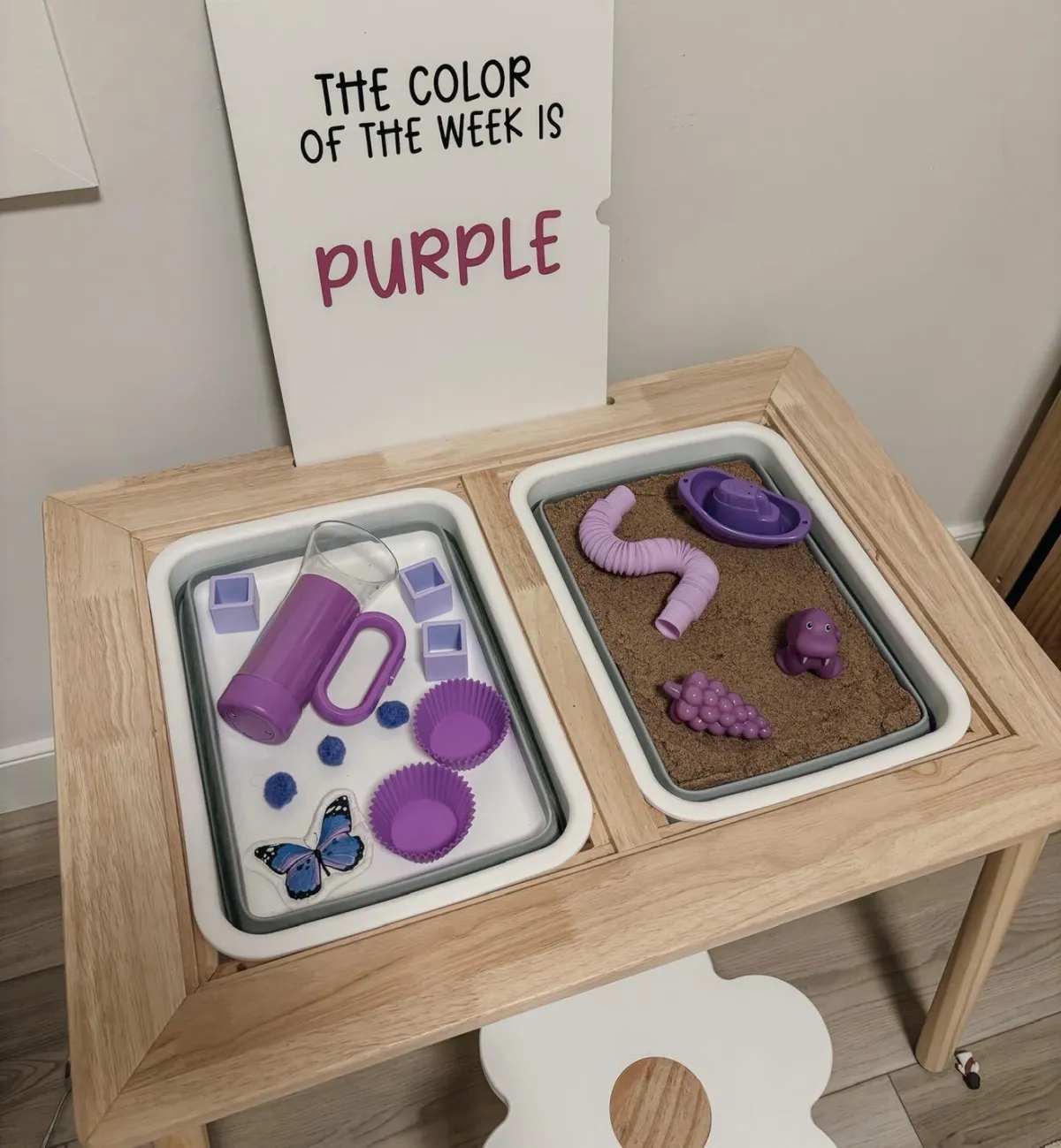
These were some of our favorites! We used toys we already had + a filler (moon sand) and I made a cute little sign on my cricut.
PREMADE SENSORY PLAY KITS
Etsy (we love supporting a small business) has a bunch of premade sensory bins kits that we love!
Here’s some of our favorite ones (P.S. I am not sponsored or make any commission off these, they just are truly awesome).
Garden Sensory Play
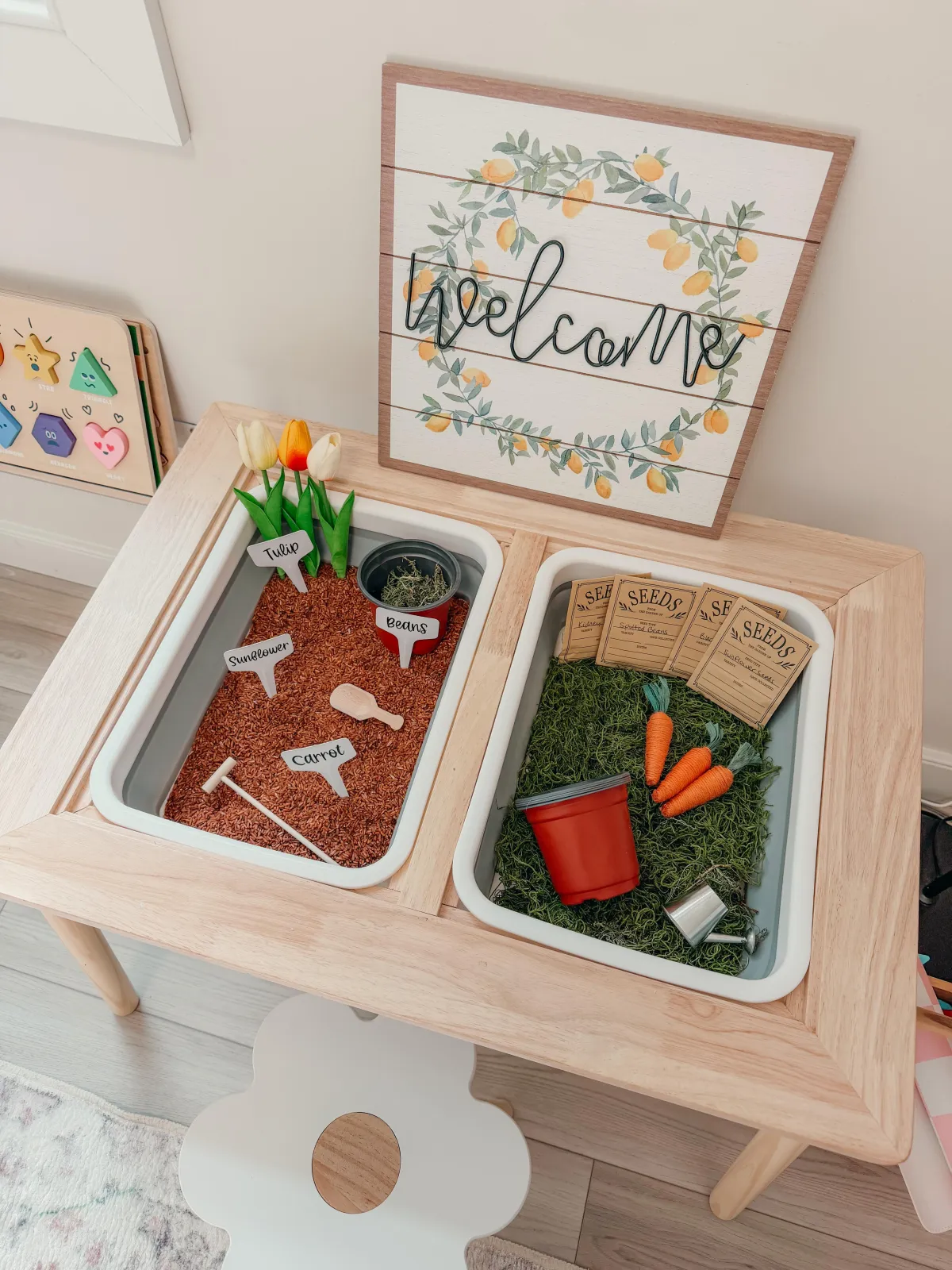
Includes: 4 cups of brown sensory rice, 2 nursery pots, faux garden moss, 3 tulips, assorted colors, wooden scoop, 4 plant labels (beans, sunflower, carrot, tulip),
mini metal watering can, wooden rake, 4 seed packets and seeds (sunflower, black bean, kidney bean, spotted bean), 3 jute carrots
Dinosaur Dig
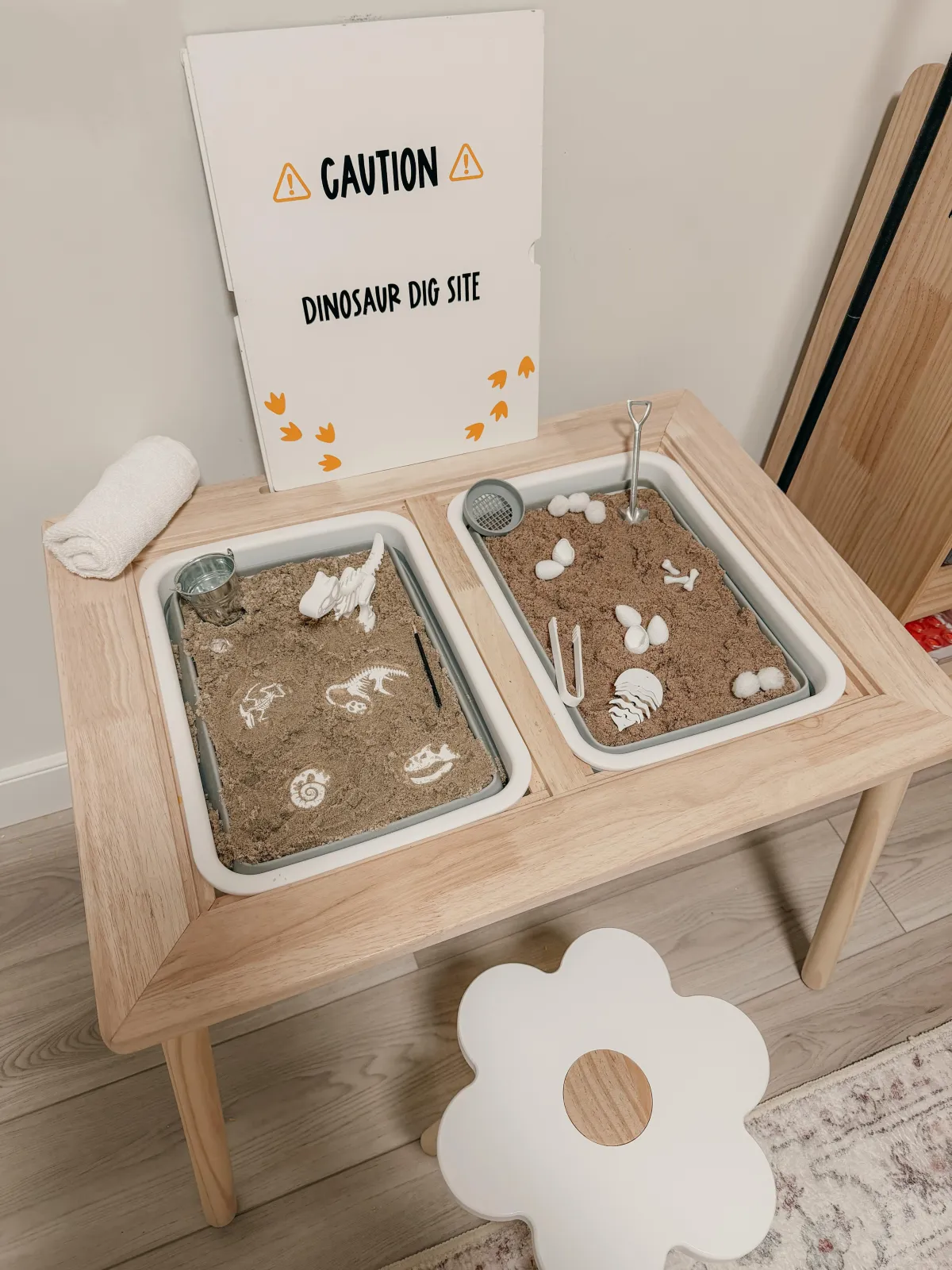
Includes: 3 cups of play sand or rice, Dinosaur skeleton puzzle, Fossil pieces, Dino Eggs, Metal bucket with handle for scooping and collecting, Sifter, brush, and tongs for fine motor skills, Trilobite, Flexible Fidget Toy, Pom poms , bone and crystal charms
Lemonade Stand
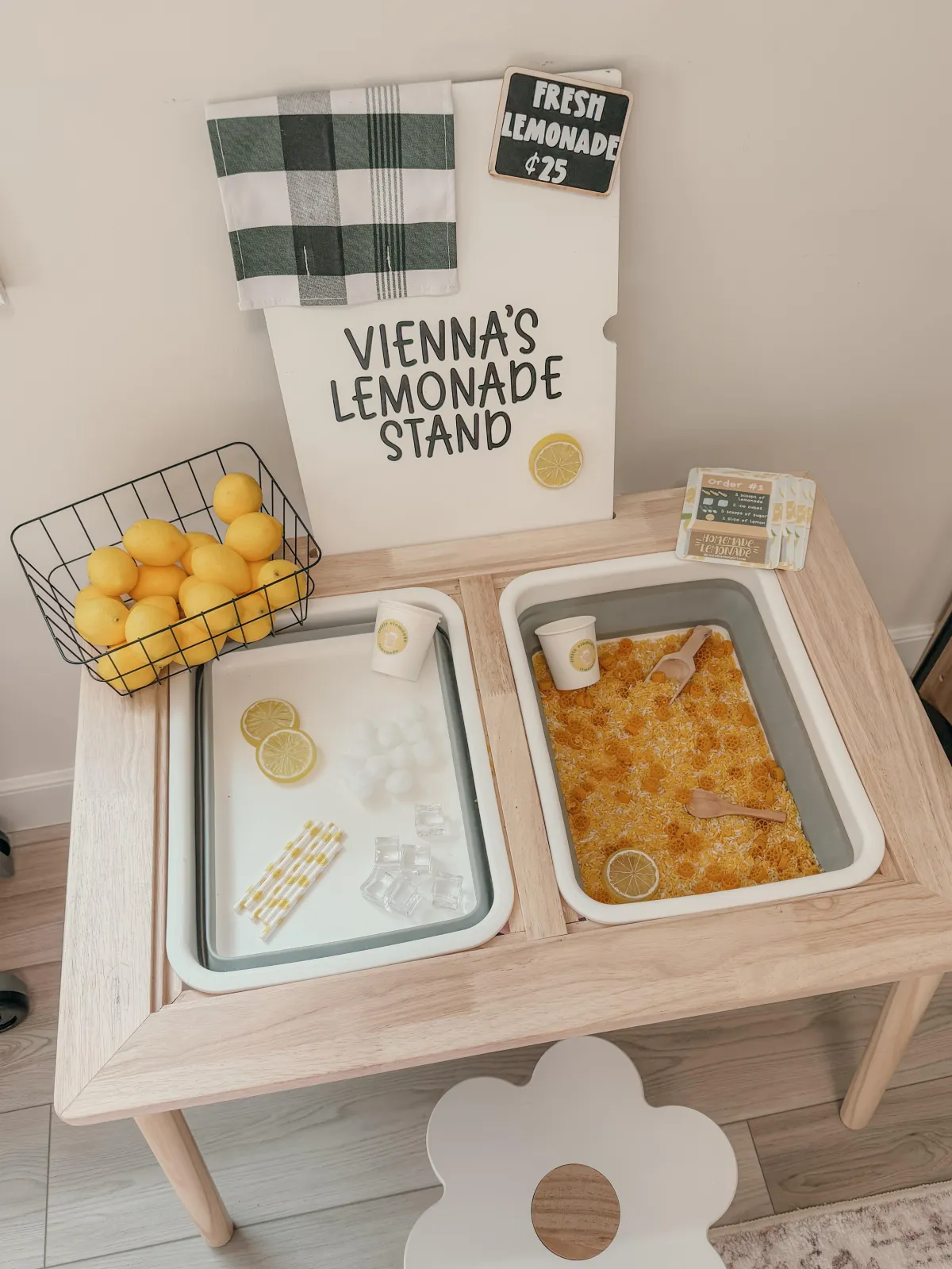
Includes 3 cups of yellow rice, 1-inch fake ice cubes, 2 plastic lemon slices, 2 paper straws, 2 lemonade cups, 3 sugar puff scoops, a lemonade stand sign, a scoop, 4 activity "recipe" cards
BEST WAY TO START?
Get a great sensory bin table (ours doubles as a drawing table too!)
Start with a filler (rice + sand + water) and add some fun things on top of it. Don’t sleep on the dollar store for toys to add in, but also you can totally use things you already have around! Be creative!
WHY WE LOVE SENSORY PLAY
Vienna has loved sensory bins since about a year old. We keep them in rotation too as she learns more skills. It keeps us away from screen time and avoids bordem.
01
It’s easy to place Vienna in front of the TV and call that educational time (no judgment, I still do it!) but we’ve been able to limit the time in front of the TV with sensory bins.
02
Studies show that toy rotation is beneficial. By doing a new sensory bins every 1-2 weeks, it’s new and exciting and she looks forward to playing with them every morning as soon as she wakes up.
03
I’ve been careful to be able to make these extremely affordable, especially when it came to color themed sensory bins. I used things we already had around (that were safe of course) and having those items in a new environment brought back the excitement about them.
04
Learning new skills, obviously! Digging for dinosaur bones, learning colors, or getting excited when she serves us “lemonade” from her lemonade stand; it’s
all fun and exciting.